Phil Taylor: “The Power” – the GOAT and his 16 steps to glory
Looking for the retail version? The Target Phil Taylor Power 9Five G11 Swiss Point 26g is shown with its steel-tip format, weight and available shops clearly identified. View the retail player dart →
Nobody shaped modern darts like Phil “The Power” Taylor.
This is the story of the “Crafty Potter”, the lad who started with a £52-a-week life in Stoke and ended up building a darts empire. But behind those 16 world titles, there was far more than talent: pure risk, obsessive training discipline and a level of technical detail that pushed darts equipment right to the edge.
Contents
Want to jump straight in? Here are the main stops in the Phil Taylor story.
- Phil Taylor darts: the era of the greatest player ever
- Patty’s Insider Check: why Taylor darts feel so special
- The technique behind 16 world titles
- Phil Taylor achievements at a glance
- The potter from Stoke and the £52-a-week life
- The night of the rebels: PDC risk and the split
- The SNAP! moment: how “The Power” was born
- The PDC empire: from factory work to millions
- What is Phil Taylor doing today?
- The Gen 3 feel secret
- The aluminium crown trap
- Quick check & availability
- Technical sheet: Power 9-Five Gen 3
- Patty’s Oche Check
- Check Phil Taylor darts on Amazon UK
- FAQ – Phil Taylor darts
- More on Phil Taylor, Bristow, Lewis, Barney and Target
- Phil Taylor: profiles, gear and career data
- Official darts bodies & sources
Phil Taylor darts: the era of the greatest player ever
Phil Taylor was never the bloke who just picked up one set of darts and left it alone forever. He kept chasing the next little edge. Grip, weight, shape, shaft, flight, balance point — if one tiny thing could make the dart fly better for his throw, he wanted it tested.
That is why his Target Power 9-Five series became such a big deal. It was not just another player signature range with a famous name on the box. It was a whole equipment journey around a player who wanted the dart to feel exactly right in the hand.
And that is also why Taylor darts can be awkward for normal players. They are not neutral, friendly, middle-of-the-road barrels. A lot of them are compact, torpedo-shaped, heavy in feel and built around a very specific pressure point.
Patty’s take: Taylor darts are fascinating because they are not trying to please everyone. They are built around one of the most demanding throws darts has ever seen. That is brilliant and dangerous at the same time.
Why Phil Taylor darts feel so special
From my time at the oche, I can tell you this straight: Phil Taylor darts are not for weak nerves. Especially the older Power 9-Five style sets feel short, compact and very direct. They do not float gently through the air like a relaxed long barrel.
Taylor wanted a dart that sat in the hand like a small lump of control. Something that left the fingers with authority. That is why some players pick them up and instantly love the feeling, while others throw three darts and think, “Nope, this thing is fighting me.”
The Gen 3 is the classic example. Compact torpedo shape, strong grip zones, that famous rear orientation point and a dart that almost demands a clean, committed throw. Half-hearted release? It will tell on you.
Real-world warning: Taylor-style darts can be magic when your throw matches them. But they are not a shortcut. When your grip and release are messy, they can feel like a little gold-and-silver punishment stick.
Phil “The Power” Taylor: the technique behind 16 world titles
No name is tied to the evolution of modern darts like Phil Taylor. The 16 world titles get mentioned so often that the number almost loses its punch. But look at it properly: 2 BDO world titles, 14 PDC world titles, and a level of dominance where other top players sometimes looked like guests at his workplace.
What made Taylor nasty was not only scoring. It was repeatability. He could keep the same pressure on the same target over and over until the opponent started breaking from the inside.
His equipment followed that logic. The dart had to give him control, a clear anchor point and a compact shape that supported his direct throw. This is why Taylor darts often feel more like precision tools than relaxed club darts.
Important: Taylor did not win all 16 world titles with Target. He joined Target later in his career. The Target era is more about technical development, product evolution and the final stage of his equipment story.
Phil Taylor achievements at a glance
With Phil Taylor, it is almost lazy to only say “16 world titles”. That number is mad enough, sure, but his dominance went much deeper than that. World Matchplay, World Grand Prix, Premier League, major titles, TV nine-darters — Taylor did not just win tournaments. He made whole eras feel like they belonged to him.
There were years where a tournament only really felt open once Taylor was finally out. That sounds brutal, but that is how dominant he was.
16 world titles in total: 2 BDO and 14 PDC.
One of the central names behind the rise of the PDC and modern televised darts.
Multiple televised nine-darters and countless nights where opponents just looked stuck.
Training discipline, match control and mental pressure became part of the Taylor brand.
Patty’s view: Taylor did not only collect trophies. He changed what “normal level” meant in professional darts.
Phil Taylor: the potter from Stoke and the £52-a-week life
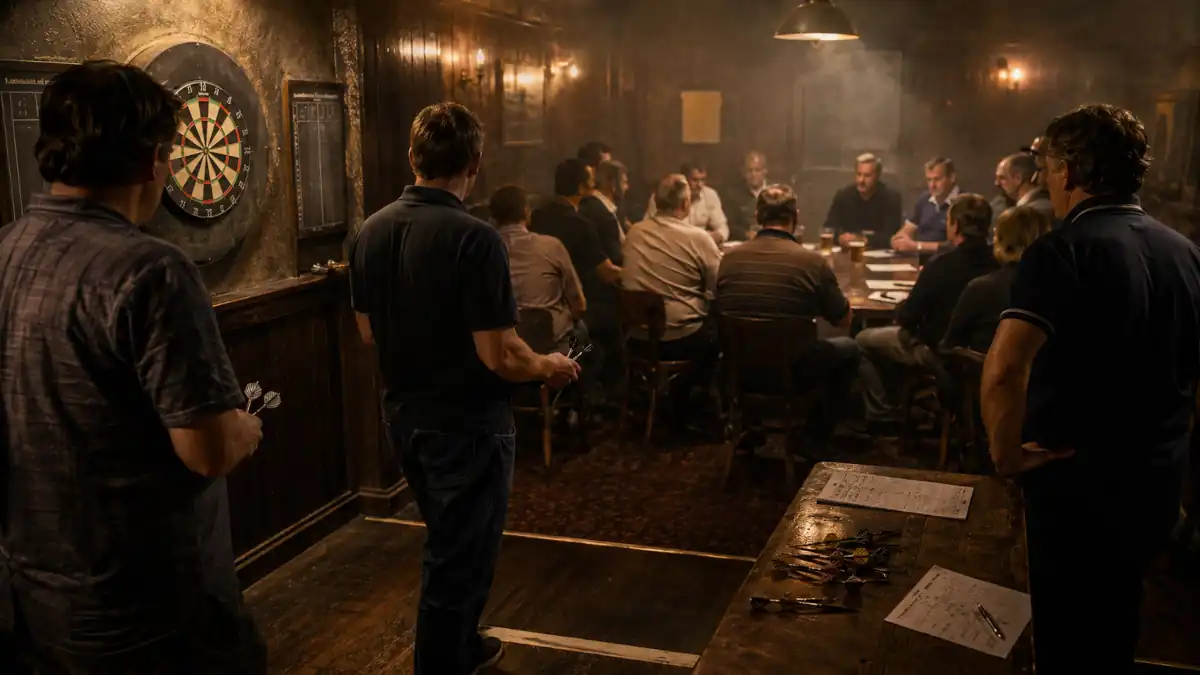
Before Phil Taylor became the biggest name in darts, life was not glamorous. He worked in a ceramic factory in Stoke-on-Trent and made toilet-roll holders. His weekly wage was around £52. Darts was still something played in smoky pubs, not a giant TV machine with big prize money and walk-on theatre.
Back then, he was known as “The Crafty Potter” — a nod to Stoke, the pottery world and Eric Bristow’s “Crafty Cockney” shadow. But this was not some rich kid hobby story. Taylor had to take a proper risk to chase darts seriously.
That risk is easy to romanticise now because we already know the ending. At the time, it was a jump into the dark. A job, a family life, limited money and a sport that did not yet look like a golden ticket.
This is the bit people forget: Taylor’s empire did not start with TV lights. It started with factory work, local darts, Bristow’s push and a bloke deciding that ordinary life was not going to be the final answer.
The night of the rebels: the PDC risk that changed everything
In the early 1990s, darts was in a nasty place. TV coverage had dropped, money was thin and the professional game looked like it might shrink instead of grow.
Phil Taylor and 15 other top players made the decision that changed the sport: they broke away and formed the World Darts Council, which later became the PDC. The old system did not exactly send flowers. The punishment came hard, including bans and legal fights.
Taylor was not just some passenger in that story. He was one of the names carrying the risk. And in those early years, there was no guarantee the rebellion would work. Not much money, not much safety, and a whole future hanging on whether televised darts could be rebuilt.
Patty’s take: this is why Taylor belongs in the PDC founding story. He did not just benefit from the boom later. He was in the risky bit before the boom looked obvious.
The SNAP! moment: how “The Power” was born
One of the best little darts stories comes from a Sky Sports studio in 1995. The story goes that production boss Peter Judge stepped on a CD case lying on the floor, picked it up and saw SNAP! – “The Power”.
That moment turned into a branding accident that almost feels too perfect. Taylor went from “The Crafty Potter” into “The Power”, and suddenly the sport had something bigger than a nickname. It had a sound, a hook and a stage identity.
That might sound like a small thing, but it was huge. Darts was becoming television. The walk-on, the lights, the music and the personality started to matter. Taylor did not only dominate the board. He became the face of the show.
Proper darts madness: sometimes a whole sporting brand begins with someone stepping on a CD case. You could not make it up without it sounding too daft.
The PDC empire: from factory work to millions
Today, Phil Taylor’s career looks like an empire. Prize money, TV, sponsorship, product lines, exhibitions, fame — the whole thing. But the wild part is how far it travelled from that £52-a-week factory life.
His wealth did not come from one lucky title. It came from years of dominance while darts itself was growing into a bigger and bigger TV product. Taylor was not just a player inside the machine. He was one of the reasons the machine became worth watching.
From a bloke making toilet-roll holders in Stoke to one of the defining names in global darts — that is the real arc of “The Power”.
Patty’s verdict: Taylor’s story is not only “great player wins lots”. It is a working-class risk story, a PDC story and an equipment story all in one.
What is Phil Taylor doing today?
Phil Taylor is no longer grinding the normal PDC tour. After his huge PDC farewell, he later played in the senior scene as well, but that active competitive chapter is now basically behind him.
That does not mean he vanished from darts. Taylor still appears around the sport, in interviews, events, shows and stories. His name is still everywhere when people talk about records, the PDC, Target darts or the biggest player ever.
But the weekly pressure — hotels, practice rooms, stage nights, ranking fights — that is not his normal life anymore. And fair enough. The man spent decades making the board feel like his personal office.
Current view: Taylor’s active prime is over. His shadow is not. Every time a new star gets compared to “The Power”, you can see how heavy that shadow still is.
The Gen 3 feel secret: why this old Taylor setup still matters
I have had the Target Power 9-Five Gen 3 in my hand several times over the years. Not because it is the newest Taylor dart. It is not. But because it has a feeling you do not forget quickly.
The key is that rear orientation point. That little hollow / edge area at the back of the barrel gives your fingers a clear reference. You grip the dart blind and know where you are. For players who rely on the same finger position every throw, that is gold.
The Gen 4 looked sharper and darker, sure. But for many players, that clear Gen 3 rear feel is exactly what made the older setup special. The Gen 4 feels smoother and more even. Nice to look at, but not the same anchor in the hand.
Important buyer note: Gen 3 is a legacy Taylor setup and not a modern Swiss Point product. Do not confuse old Power 9-Five Gen 3 talk with later Gen 10 or Gen 11 Swiss Point models.
The aluminium crown trap: why the pro-style setup can get expensive
The Taylor Gen 3-style setup is not just barrel, shaft and flight in the normal boring way. You get the barrel, the titanium shaft and then those removable aluminium crowns that hold the flight.
Sounds cool. Looks cool. Feels premium. But then the Robin Hoods start.
The titanium shafts themselves can last ages. The crowns? Different story. When another dart smashes into that crown, it can open up, bend or stop gripping properly. And when you throw tight groups, that can happen often enough to become annoying.
That is why some players move towards integrated or more forgiving rear systems like L-Style, Condor or One80. Not because the Taylor crown idea is stupid. It is not. It is clever and premium. But it can cost money when you are actually hitting the same area again and again.
Patty’s warning: the Taylor pro feel can be brilliant, but rear-end running costs are real. Tiny bits of aluminium can become a surprisingly annoying little money drain.
Quick check & availability
Phil Taylor darts are messy on Amazon UK because there are many generations: Gen 3, Gen 4, Gen 5, Gen 9, Gen 10, Gen 11, Power 8-Zero, soft tip versions, steel tip versions, shafts, flights and accessories.
That is exactly how people end up buying the wrong thing. One product title says Taylor. Another one says Power 9-Five. Another says Swiss Point. Then the image looks close enough and suddenly the parcel arrives with the wrong generation or the wrong tip type.
My tip: check three things before buying: steel tip or soft tip, exact generation and weight. Especially with Taylor, one little product detail can change the whole feel in the hand.
Technical sheet: Phil Taylor Power 9-Five Gen 3
This section is about the old Gen 3 legacy setup, because that is the dart many Taylor fans still talk about when they mean that compact, direct, gold-silver-brown Power 9-Five feeling.
95% tungsten barrel, built for a slim but very dense, compact feel.
Short torpedo-style barrel with a strong, direct hand position.
Pixel Grip plus strong rear orientation point. You know where the fingers sit.
Legacy Gen 3 steel tip setup, not a modern Swiss Point system.
For players who like compact barrels, clear pressure points and a firm, direct release.
Not the most forgiving shape for players who prefer long, calm, straight barrels.
Important: this data block is here because Gen 3 is the legacy feel section. The Amazon buy block below uses the cleaner current Amazon route, not an old Gen 3 page with no useful featured offer.
The short Taylor torpedo: brilliant, but not for everyone
The Phil Taylor Power 9-Five Gen 3 is not a dart for half-decisions. The short torpedo shape gives you that compact, tight, heavy-in-the-hand feeling that many Taylor fans love.
When you like compact barrels, want to stack tightly and enjoy a direct, grippy feel, this kind of setup can be properly interesting. But when you prefer long, smooth, relaxed barrels, Taylor Gen 3 is probably not your lane.
My advice: Taylor-style darts reward a clean grip point and a committed release. They do not babysit your throw. When your release is lazy, the dart will show it.
Check Phil Taylor darts on Amazon UK
Target Phil Taylor Power 9Five G11 Swiss Point 26g
A currently available 95% tungsten steel-tip legacy model. It is kept separate from Taylor’s historic tournament setups.
With Taylor darts, I am not going to force the old Gen 3 Amazon page into the buy box when it is not a clean route. The Gen 3 is important for the story and the feel analysis, but I cannot find it as a proper current buying route right now.
So I am not linking some half-dead old listing here. If you want to look at a newer Taylor dart, this route goes to the Target Phil Taylor Gen 11 Power 9-Five Swiss Point Steel Tip Darts.
Important: Gen 3 is legacy and not Swiss Point. Gen 11 is a modern Swiss Point product. Do not mix these two up when comparing Taylor darts.
Target Phil Taylor Gen 11 Power 9-Five Swiss Point Steel Tip Darts →
Newer Taylor route with 95% tungsten, Swiss Point and the Raw Power G11 setup. Different feel from the Gen 3, yes. But it is a proper current Taylor dart and not some old listing that leads nowhere.
Quick check before ordering: steel tip, exact generation, weight and Swiss Point wording. With Taylor products, Amazon can also show soft tip sets, old generations, shafts or flights nearby.
FAQ – Phil Taylor darts
How heavy are Phil Taylor darts?
Phil Taylor is strongly linked with heavier steel-tip setups, often around 26g in classic Taylor talk. But modern Taylor products exist in different weights, so always check the exact model before ordering.
Which Phil Taylor darts are especially famous?
The Target Power 9-Five range is the big Taylor signature line. The Gen 3 is especially interesting for many players because of its compact torpedo shape, Pixel Grip and clear rear finger reference.
Did Phil Taylor win all 16 world titles with Target darts?
No. Taylor joined Target later in his career. His 16 world titles were won across a long career before and during the PDC era. The Target years are more about later-career product development and the Power 9-Five range.
Are Phil Taylor Gen 3 darts Swiss Point?
No. Treat the Gen 3 as a legacy steel-tip setup, not a Swiss Point setup. Later Taylor products marked SP, such as Gen 10 or Gen 11, are a different story.
Are Phil Taylor darts good for beginners?
They can work, but they are not the softest beginner choice. Short torpedo shapes, heavier feel and direct grip can be brilliant for the right throw, but they do not forgive every beginner wobble.
Why are Phil Taylor darts so special?
Because they are heavily shaped around Taylor’s own throw: compact, direct, grippy and built around clear finger reference points. They are not neutral all-round darts. They are Taylor tools.
Is Phil Taylor still active on the PDC tour?
No. Phil Taylor is no longer active on the regular PDC tour. He later played senior darts, but his era as the dominant weekly tour force is over.
Why is Phil Taylor called “The Power”?
The nickname came from the SNAP! track “The Power”. Before that, Taylor was known as “The Crafty Potter”, but “The Power” became one of the most iconic nicknames in darts.
More on Phil Taylor, Bristow, Lewis, Barney and Target
Phil Taylor never stands alone in darts history. His story runs through Bristow, the PDC split, Adrian Lewis, Rob Cross, Barney and the whole Target equipment world.
- Mentor story Eric Bristow: the man who spotted Taylor early → Without Bristow, the Taylor story would probably have looked very different. This is the Crafty Cockney connection.
- PDC roots The history of the PDC: the revolt that saved pro darts → The story of the split, the risk, the 16 rebels and why modern darts does not exist in the same way without them.
- Student and chaos talent Adrian Lewis: “Jackpot”, Stoke and the Taylor connection → Two world titles, outrageous natural talent and a career you cannot fully separate from The Power.
- Final opponent Rob Cross: the electrician who ended Taylor’s final big run → The man who beat Taylor in the 2018 World Championship final and closed one of darts’ biggest chapters.
- Great rival Raymond van Barneveld: Barney, Taylor and the TV-era rivalry → Barney was one of the few names who could really make Taylor feel the heat on the biggest stages.
- Gear world Target Darts Pro Check: all star setups at a glance → Phil Taylor, Luke Littler, Rob Cross, Josh Rock and more Target players in one direct setup comparison.
- Overview Stars & Legends on DartWorldHub → The central overview for big names, old rebels and modern world stars.
Phil Taylor: profiles, gear and career data
When you want to check Phil Taylor’s titles, career path and equipment background directly, these are the reference points I would use first.
- Official PDC archive PDC Hall of Fame: Phil Taylor → Official PDC archive page around Taylor’s Hall of Fame status, world titles and career position in the sport.
- Manufacturer profile Target Darts: Phil Taylor player world → Official Target page for Phil Taylor and his modern Target product range.
- Official gear Target Phil Taylor Power 9Five G11 SP → Official Target product page for the Gen 11 Swiss Point steel tip darts, including tungsten, points, shafts and box contents.
- Career data Darts Database: Phil Taylor profile → Player information, career data, titles and historical tournament records.
- Titles & records Mastercaller: Phil Taylor profile → Overview of Taylor’s titles, records, nickname, walk-on and major career numbers.
- More stats Darts Orakel: Phil Taylor career overview → Extra statistics, player data and tournament history around Phil Taylor.
Official darts bodies & sources
For the wider darts world behind Taylor, PDC history and English-speaking darts, these are useful official organisations and reference points.
- Professional darts Professional Darts Corporation (PDC) → Official PDC site with news, tournaments, players, rankings and the modern pro tour that Taylor helped build.
- World federation World Darts Federation (WDF) → International darts body with events, member nations, competitions and worldwide darts information.
- England England Darts → Official governing body for darts in England, covering national teams, events and grassroots darts.
- Scotland Scottish Darts Association → National darts organisation for Scotland with event, team and competition information.
- Wales Welsh Darts Organisation → Welsh darts body with national darts information, competitions and official updates.
- Ireland Irish National Darts Organisation → Irish darts organisation with information around national competitions and organised darts in Ireland.
- USA American Darts Organization (ADO) → US darts organisation with rankings, events and national darts information.
- North America Championship Darts Corporation (CDC) → North American pro darts organisation and a useful source for the wider English-speaking darts scene.