Darts Buying Guide 2026: Weight, Grip and Barrel Shape Explained
Twenty years at the oche. A fair bit of cash burned. And one thing keeps coming back: your darts need to suit your hand, your grip, your release and your throw — not just the fancy wording on the box.
Contents
If you want to jump straight to a specific part, here are the main sections.
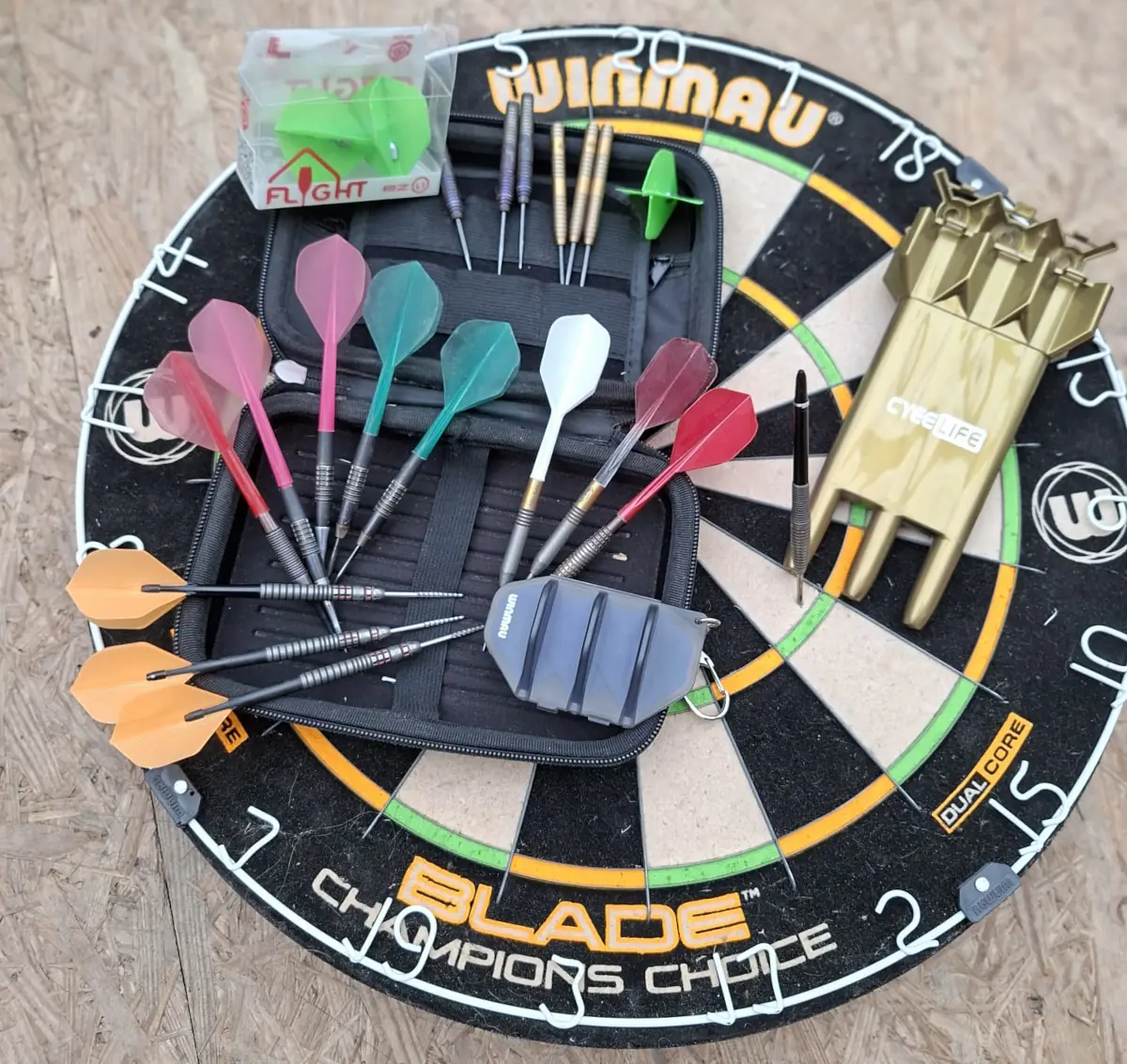
Twenty years at the oche: what I can actually tell you
You know how it goes. Everyone writes something like “my expert guide” or “the ultimate darts advice”. Sounds nice. Whether there is proper substance behind it, or just shiny waffle, you notice soon enough.
What I can put on the table is twenty years at the oche, plenty of gear tested and a few purchases that hurt the wallet more than they should have. I can tell you which setups I have played with, what worked for me and where I burned money. But one thing is clear: just because a dart flies well for me, that does not mean it will suit you.
If you want to play darts and actually improve, there is no magic shortcut. You have to find your own route. I can show you how different grips, weights, balances and barrel shapes feel — but you still have to throw the thing yourself.
Straight up: the wrong dart can hold your throw back more than you think. On this page, I pull together my tests, checks and dart comparisons — no catalogue fluff, no sales smoke, and no pretending there is one perfect dart for everyone.
The most important darts guides on DartWorldHub
If you are looking for darts, this is the starting point. From here you can jump into the comparison guides, weight guides and main recommendations.
- Recommendations and picks Best steel tip darts 2026 → The quick route if you want to get straight to the strongest recommendations and practical buying advice.
- Main comparison Dart comparison 2026 → A guide to weight, grip, balance, barrel shape and playing style.
- Control and precision 23g dart comparison 2026 → For players who want a controlled setup without the dart feeling too slow or heavy in the hand.
- Stability and weight 24g dart comparison 2026 → For players who want a touch more weight, calmer flight and a steadier feeling through the throw.
What I’m testing next
With darts, the story never really ends. We keep looking at new barrels, player darts and setups from brands like Target, Winmau, Red Dragon, Shot Darts, Unicorn, Harrows, Mission, One80, Bull’s and KOTO.
And here is the thing: reading the brand name on the box is not enough. A Target dart can be well made yet still not suit your grip. A Red Dragon barrel can feel made for one player and absolutely ruin another player’s release. That is why we do not just look at brand and price. We look at what actually matters at the oche: grip, weight, balance, barrel shape and real flight behaviour.
In plain English: I am not stuffing this page with catalogue text just to make it look full. New darts are added only when their place in the comparison is clear. And if a dart looks lovely in the product photo but feels like a brick in the hand, that needs saying as well.
Right now, barrels and pro setups from Target, Shot Darts, Red Dragon and Winmau are high on the list. New checks will follow once they are not just unboxed, but properly put through their paces.
What really matters when choosing darts
Weight
23g, 24g or something lighter? Weight changes how the dart feels in the air and how much force you need through the throw. A heavier dart can feel more stable, but it can also leave the hand a bit slower.
Grip
Grip is not just “the more, the better”. Too much grip can catch on the fingers during release. Too little grip can make the dart feel insecure. What matters is how your fingers actually sit on the barrel.
Barrel shape
Straight barrels, torpedo shapes, front-loaded darts, centre-weighted setups — that affects more than appearance. Shape often decides whether the dart leaves the hand cleanly or fights you every throw.
Balance
A dart can balance more towards the front, the middle or the rear. That changes the feeling when aiming, drawing back and releasing. That is why two 24g darts can feel very different.
The setup around it
Flights, shafts and points can make a good dart work better — or turn it into a nuisance. The barrel is the heart of the dart, but the rest still decides how it really flies.
Simple rule: do not buy darts just because of the pro name, the colour or the box. Understand where your fingers sit first. Then choose weight and shape.
What I would do when buying darts
I would not start by blindly buying the most expensive set. First, I would look for a sensible weight, a barrel shape that fits the hand and a grip that does not annoy me on release.
If you still do not know what suits you, start with the beginner guide and then move into the 23g or 24g comparisons. Plenty of players buy far too early because of a pro name. Looks nice, sure. But if the dart sits badly in your hand, it does not matter who has signed the box.
My view: I would rather take a fairly plain dart that fits your hand properly than an expensive set that only looks the part in your basket.
FAQ: common questions about darts
What darts are best for beginners?
For most beginners, a solid steel tip dart with medium grip and a weight around 23g to 24g is a good starting point. Very aggressive barrels or extreme shapes can make things harder than they need to be early on.
Are expensive darts automatically better?
No. Expensive darts can be well made, but they still need to suit your grip, throw and release. A cheaper dart that sits properly in your hand can work better than a premium pro set that fights your throw.
What matters more: weight or grip?
Both work together. Weight changes the flight and overall throwing feel. Grip changes control and release. If the grip catches on your fingers, the perfect weight will not save the throw.
Should I choose 23g or 24g darts?
23g darts often feel a bit more direct and controllable for many players. 24g darts can feel calmer and more stable. Which option suits you depends heavily on your throw.
Why do my darts fly strangely even with a good barrel?
It could be the flights, shafts, points, balance or your release. The barrel matters a lot, but the full setup decides how the dart actually travels and lands in the board.
More useful DartWorldHub guides
If you want to understand your darts properly instead of buying on impulse, these pages are the next logical step.
- Beginners Darts beginner guide 2026 → The best starting point if you are not sure which weight, grip or barrel shape might suit you.
- The heart of the dart Steel tip barrels guide 2026 → Shape, grip, balance and material — the stuff that decides how the dart really feels in your hand.
- Brand and pro setups Target Darts Pro Check 2026 → Swiss Point, Pixel Grip, pro-player darts and the real question: which Target setup might actually suit your throw?
- Stabilise the flight Dart flights comparison 2026 → If your dart is wobbling through the air, the barrel is not always the only thing to blame.
- Length and balance Dart shafts comparison 2026 → Nylon, aluminium, carbon and shaft length — small parts with a big say in how your dart behaves.
- Grip in the board Steel dart point comparison 2026 → Which points hold properly in the board and when aggressive grip can do more harm than good.
Official darts bodies & useful sources
If you want to look past the gear and into the official side of darts, these are useful sources for pro events, UK darts organisations, rankings, tournaments and the wider international scene.
- Professional darts Professional Darts Corporation (PDC) → The main professional stage for darts: events, schedules, scores, tickets, players and PDC tour news.
- World darts World Darts Federation (WDF) → The international darts federation, with world events, member nations, rankings, players and competitions.
- England England Darts → The official governing body for darts in England, covering national teams, world-ranked events and the English darts structure.
- Scotland Scottish Darts Association → Scottish darts news, competitions, national teams and tournament information from the Scottish darts scene.
- Wales Welsh Darts Organisation → The governing body of darts in Wales, covering Welsh national teams, competitions and world-ranking events.
- Ireland Irish National Darts Organisation (INDO) → Official Irish darts information, events and news from the Irish National Darts Organisation.
- United States American Darts Organization (ADO) → A useful source for US darts, rankings, approved tournaments, national events and American darts news.
- North America Championship Darts Corporation (CDC) → North America’s professional steel-tip darts tour and one of the key routes towards bigger PDC-stage opportunities.