PDC History and Foundation: The Night of the 16 Rebels
16 players, a broken organisation and the moment modern darts was born.
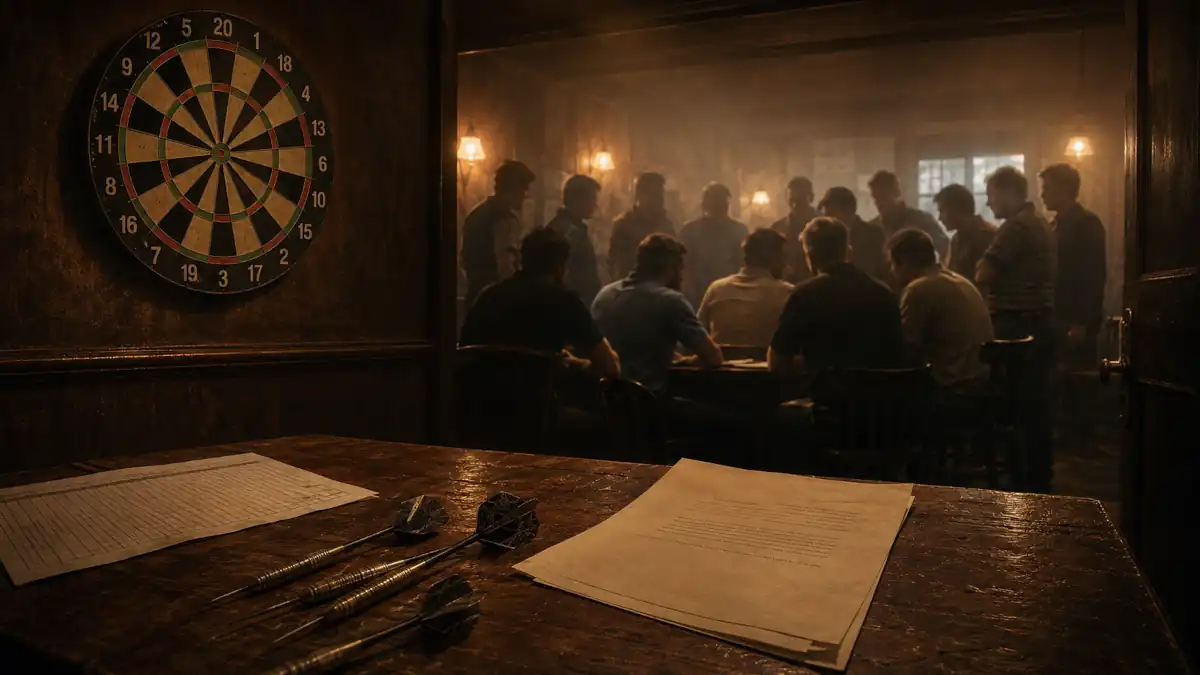
Table of Contents
If you want to jump straight to a specific part of the story, here are the key sections.
The slow death in a cloud of cigarette smoke
It is 1991. Darts in Britain is clinically dead. What we now know as bright arenas, TV lights and million-pound prize funds was, back then, a sport shoved onto the scrapheap.
The BBC and ITV had cut back their coverage almost completely. The image? Blokes with beer bellies, cigarette smoke hanging in the air and a few quid on the bar. Stale clichés everywhere you looked, and a public that had pretty much stopped taking darts seriously.
The BDO, the British Darts Organisation under Olly Croft, was managing decline. No vision, no proper marketing, no movement. Just standstill. The best players in the world were watching their livelihood crumble. They were professionals without a stage.
The moment patience finally snapped
Imagine you are Phil Taylor or Eric Bristow. You know you are one of the best players on the planet, but you have nowhere left to prove it. In January 1992, the unthinkable happened. This was not some polished gala night. It was a back-room rebellion, born from frustration and survival.
16 players came together and formed the World Darts Council (WDC), the organisation we now know as the PDC. The aim was simple, but dangerous: professionalise the sport, bring television back and drag darts out of the shadows before it disappeared for good.
Betrayal and the human cost
It was never a clean march to victory. The pressure from the BDO was brutal. They threatened players, friendships were wrecked, and the whole thing turned nasty fast. Then came the moment that almost brought the rebellion crashing down: two rebels cracked.
Mike Gregory and Chris Johns could not hold out under the psychological pressure. They went back to the BDO, hoping for safety. For the remaining 14, it was a proper gut punch. Gregory, perhaps the best player behind Taylor at the time, lost his rhythm after that decision and his career never really reached those heights again. That was the human tragedy behind the business war.
The court war and the final triumph
The BDO did not just want to beat the rebels. It wanted to crush them. What followed was a long, grinding legal battle that burned through serious private money — money the players often had to put up themselves while their careers were hanging by a thread. It was David against Goliath, plain and simple. The 14 who stayed the course were not just fighting old officials. Every day, they were fighting their own fear as well. Plenty of them woke up not knowing whether their dream of being professional darts players would still exist by the evening.
But they stuck together, despite all the threats. In 1994 they staged their own World Championship at the legendary Circus Tavern in Purfleet. It was small, loud, smoky and rough around the edges — but it was the moment the PDC foundation story scored its first real victory. The crowd could feel it: something new was being born. Something real. Something that actually respected the fans.
In 1997, the historic settlement finally came. The WDC was officially renamed the PDC, the Professional Darts Corporation, and recognised as an independent organisation. The dam had burst. Sky Sports came in with major TV money, prize funds exploded, and darts almost overnight turned from a mocked pub game into a global TV phenomenon. That iron will from the rebels is the foundation the modern PDC empire still stands on today.
The 16 Rebels of the PDC foundation era
16 players rebelled against the BDO in 1992 and founded the World Darts Council, the forerunner of today’s PDC.
Two of them, Mike Gregory and Chris Johns, could not withstand the enormous pressure and later returned to the BDO.
Here are all 16 founding members. The linked cards lead to pages that are already finished.
Patty’s honest verdict
I was not there. I did not live through that war first-hand. But when you really dig into this story, you quickly realise what was actually at stake. Without that breakaway, darts would very probably never have become the sport we know today. That is exactly why these men deserve respect.
Official darts bodies & useful sources
If you want to look past the gear and into the official side of darts, these are useful sources for pro events, English-speaking darts structures, rankings, tournaments and the wider international scene.
- Professional darts Professional Darts Corporation (PDC) → The main professional stage for darts: events, schedules, scores, tickets, players and PDC tour news.
- World darts World Darts Federation (WDF) → The international darts federation, with world events, member nations, rankings, players and competitions.
- England England Darts → The official governing body for darts in England, covering national teams, world-ranked events and the English darts structure.
- Scotland Scottish Darts Association → Scottish darts news, competitions, national teams and tournament information from the Scottish darts scene.
- Wales Welsh Darts Organisation → The governing body of darts in Wales, covering Welsh national teams, competitions and world-ranking events.
- Ireland Irish National Darts Organisation (INDO) → Official Irish darts information, events and news from the Irish National Darts Organisation.
- United States American Darts Organization (ADO) → A useful source for US darts, rankings, approved tournaments, national events and American darts news.
- North America Championship Darts Corporation (CDC) → North America’s professional steel-tip darts tour and one of the key routes towards bigger PDC-stage opportunities.