Bob Anderson: “The Limestone Cowboy” – the javelin thrower who took over the oche
Looking for the retail version? The Unicorn Bob Anderson World Champion Steel is shown with its steel-tip format, weight and available shops clearly identified. View the retail player dart →
Bob Anderson was not just another bloke with a set of darts and a decent nickname. He came from athletics, from javelin, from a world where timing, body control and rhythm actually mean something. Then the injury came along and basically wrecked the sporting path he was on.
For a lot of people, that would have been the end of the story. Bit of bad luck, bit of bitterness, then off you go and tell the tale in the pub for the next thirty years.
Bob did something else. He took that athlete’s feel to the dartboard and became “The Limestone Cowboy” — BDO World Champion, three-time World Masters winner and one of the original names who helped push darts towards the PDC era. Hat, moustache, cowboy walk-on, yes. But behind all that was a proper sportsman.
Contents
Want to jump straight to a bit of the Bob Anderson story? Here you go, no messing about.
- From javelin to the oche
- Bob Anderson achievements
- Why Bob mattered to the PDC breakaway
- The story behind “The Limestone Cowboy”
- Bob Anderson darts and setup
- Bob Anderson or Gary Anderson?
- Bob Anderson facts
- Bob Anderson darts check
- Pattys Oche-Check
- FAQ
- More DartWorldHub legends
- Bob Anderson sources
- Official darts bodies & useful sources
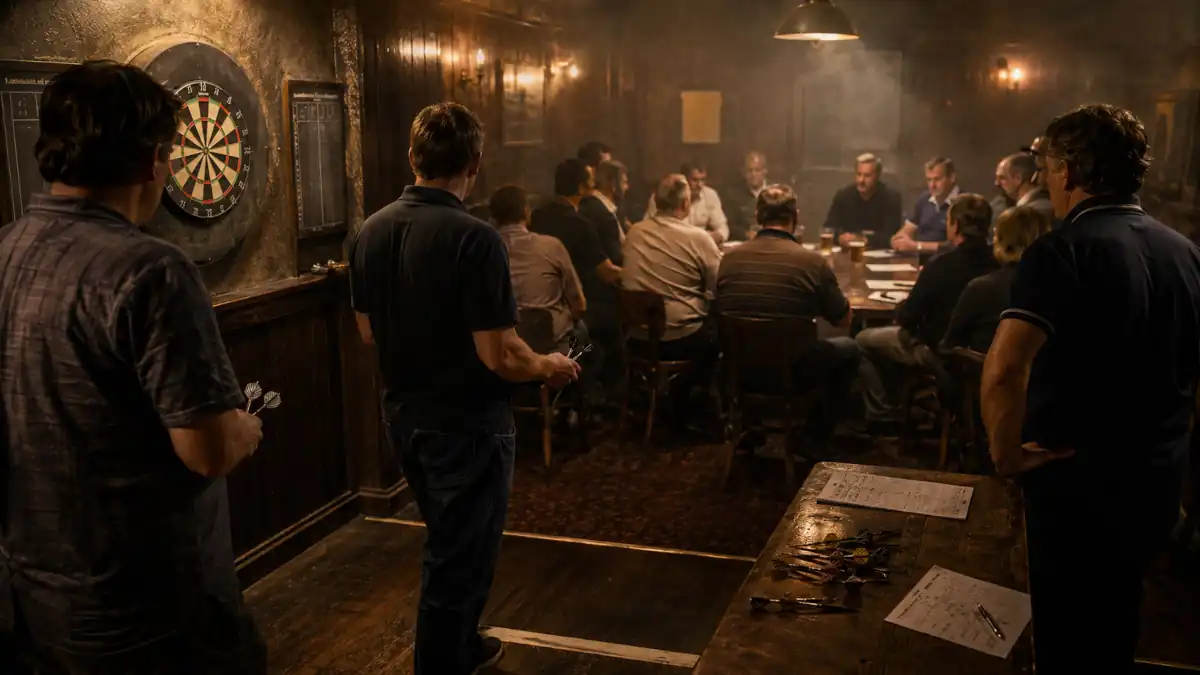
From javelin to the oche: Bob Anderson’s second sporting life
Bob Anderson’s story does not start with the dartboard. It starts outside, on the throwing field. He was a javelin thrower, so he came from a sport where timing, shoulder position, body line and rhythm are not decoration. They are the whole point.
Then the arm injury hit. No film music, no slow-motion hero moment, just a proper sporting cut-off. His body would not let him keep doing what he was built to do at that level.
But the interesting bit is what he carried into darts afterwards. Bob did not look like someone just lobbing tungsten and hoping for the best. His throw had that athletic feel about it: balanced, measured, not rushed. Like the body knew the job before the hand let go.
Pattys read: Bob Anderson did not single-handedly turn darts into a sport. But he was one of those players where you could see it straight away: this was not pub luck in a cowboy hat. This was an athlete at the board.
Bob Anderson achievements: when the Limestone Cowboy was bossing it
With Bob Anderson, it is easy to get distracted by the image. The hat, the moustache, the cowboy thing, the walk-on feel. Lovely stuff. But do not let the show hide the darts. In the late 80s, Anderson was not stage decoration. He was one of the most dangerous players on the planet.
Do not miss this bit: Bob Anderson was not only an old BDO name. Those later PDC semi-final runs showed he was still awkward, still dangerous and still not someone you wanted in your quarter of the draw.
Why Bob Anderson mattered to the PDC breakaway
When the original players broke away from the old darts structure, it was not just a tidy rebrand with a new badge and a smarter poster. It was messy, risky and full of proper bad blood.
For the breakaway to look serious, it needed more than loud mouths and big opinions. It needed players with weight behind their names. Bob Anderson brought that. Former world champion. Three-time World Masters winner. Not a bloke moaning from the back of the room, but a proper champion saying the game needed a different future.
That matters. Because when players like Bob stood in that movement, the new professional direction looked harder to dismiss. He gave the whole thing a bit more sporting backbone.
Simple version: Bob Anderson was not the only reason the PDC era could happen. But without players like him, the breakaway would have looked a lot easier to write off as a pub argument with paperwork.
The story behind “The Limestone Cowboy”
Bob Anderson was never just Bob Anderson on stage. He was “The Limestone Cowboy”. And unlike a lot of forced darts nicknames, this one actually had legs.
The cowboy bit
The cowboy image became his stamp. The hat, the stage presence, the whole Western feel. In an era where plenty of players simply walked up in a shirt and got on with it, Bob had a look you remembered straight away.
The music
His walk-on was tied to “Rhinestone Cowboy”, and that suited him down to the ground. He did not just walk out like another name on the card. He arrived as a character.
The effect
It was not just fancy dress. The whole thing worked because his game was calm, measured and slightly untouchable. The image said cowboy. The throw said control.
Pattys read: With Bob, the show fitted the player. It was not cheap costume stuff. It was old-school darts theatre with a world-class player underneath it.
Bob Anderson darts: control, rhythm and no pub-luck nonsense
Bob Anderson’s throw did not need a daft gimmick barrel. His game was built around rhythm and body control. So the darts linked with him make sense: classic, controlled, mostly straight-to-business tungsten rather than some overdesigned grip monster.
He is strongly associated with Unicorn darts, and modern Bob Anderson listings can appear in different versions. That is where you need to keep your eyes open. With older player darts, you can run into different weights, old stock, soft tip versions, Ambassador versions and World Champion versions.
Bob Anderson is mainly linked with Unicorn darts and classic player-style tungsten barrels.
Controlled, classic and more about clean release than savage grip.
Calm, athletic, smooth enough to make the dart look like it has already decided where it is going.
Always check steel tip vs soft tip, exact weight and variant before buying. Do not just see “Anderson” and click like a half-asleep donkey.
Important: For a normal sisal dartboard, you want steel tip darts. Some older Anderson-style offers can be soft tip or odd variants, so check the listing properly before you buy.
Bob Anderson or Gary Anderson? Do not mix them up
No, Bob Anderson and Gary Anderson are not the same player. And no, this is not some simple shared darts-family story either. Anderson is not exactly a rare name in the English-speaking world.
Englishman, “The Limestone Cowboy”, BDO World Champion 1988 and part of the old PDC breakaway story.
Scotsman, “The Flying Scotsman”, modern PDC world-class name and one of the smoothest throwers you will ever see.
Old school, cowboy image, javelin background and rebel-era credibility.
Modern elite scoring, monster natural rhythm and huge PDC-stage career.
Pattys insider bit: For the PDC origin story, Bob Anderson is the more important building block. Gary Anderson is one of the later giants who could shine inside the professional structure that players like Bob helped force into being.
Bob Anderson facts
| Topic | Details | DartWorldHub read |
|---|---|---|
| Full name | Robert Charles Anderson | The name behind “The Limestone Cowboy”. |
| Nickname | “The Limestone Cowboy” | One of the great old-school darts stage identities. |
| Born | 7 November 1947, Winchester, England | A proper English darts legend from the hard old school. |
| Biggest title | BDO World Champion 1988 | The title that puts him in the world champion club forever. |
| World Masters | Winner in 1986, 1987 and 1988 | Three in a row is not luck. That is a proper spell of dominance. |
| Playing background | Former javelin thrower | That athletic rhythm is a big part of why Bob feels different from many old pub-era names. |
| PDC connection | Part of the breakaway generation | Not just a champion, but one of the names tied to the modern pro game taking shape. |
Bob Anderson darts check
Unicorn Bob Anderson World Champion Steel
A currently available 90% tungsten steel-tip legacy model in 20g, 22g or 24g. It remains separate from Anderson’s historic tournament setup.
If you are looking for Bob Anderson darts in the UK, slow down for two seconds and check the listing properly. There are Unicorn World Champion style versions around, different weights and sometimes older offers that are not what you thought you clicked.
Important: for a normal bristle dartboard, you need steel tip darts. Check the weight too. Bob Anderson darts can appear in several variants, and the wrong one will annoy you before you have even thrown a leg.
Why also check Darts Corner UK? Amazon UK is quick, but darts stock can be messy: wrong variants, soft tip mixed with steel tip, or products suddenly out of stock. Darts Corner UK has a dedicated Bob Anderson product page, but this model can also be unavailable there, so use it as an availability check rather than a guaranteed stock promise.
Pattys Oche-Check: Bob was an athlete in a cowboy hat
I will say it straight: Bob Anderson is one of those players who made old darts look more like sport and less like bloke-with-a-pint-has-a-good-night. Not because he turned the oche into a gym. God forbid. But because his whole throw had a different feel.
You can see the athlete in him. The balance. The rhythm. The way the movement looks like it starts before the dart is even in the air. That does not happen by accident.
And in the PDC breakaway story, Bob mattered because he gave the new direction credibility. A former world champion, a World Masters machine, a recognisable stage character and a proper player. That is a strong mix.
My take: Bob Anderson was world champion, cowboy, athlete and rebel. Not the loudest chaos merchant, but one of the names that helped darts look like it had a serious future.
FAQ: Bob Anderson
When did Bob Anderson become World Champion?
Bob Anderson became BDO World Champion in 1988. He beat John Lowe 6-4 in the final.
Why was Bob Anderson called “The Limestone Cowboy”?
The nickname fitted his cowboy-style stage image. Bob had the hat, the Western feel and the walk-on character, but underneath it he was a serious world-class darts player.
Was Bob Anderson really a javelin thrower?
Yes. Bob Anderson came from athletics and was a javelin thrower before his darts career became famous. That athletic background is part of why his throw is often talked about differently from many old-school players.
What major titles did Bob Anderson win?
His biggest titles include the 1988 BDO World Championship and the World Masters in 1986, 1987 and 1988.
Was Bob Anderson part of the PDC breakaway?
Yes. Bob Anderson was part of the breakaway generation that helped move professional darts towards the PDC era.
Are Bob Anderson and Gary Anderson related?
They are not known as a darts family story. Bob Anderson is the English “Limestone Cowboy”; Gary Anderson is the Scottish “Flying Scotsman”. Different players, different eras, different stories.
What darts suit the Bob Anderson style?
Classic, controlled steel tip tungsten darts suit the Bob Anderson feel best. Look for a clean release, sensible weight and a barrel that does not fight your throw.
More DartWorldHub legends
If you want to place Bob Anderson properly, these names belong nearby: rivals, rebels, old-school monsters and the players who helped drag darts into the professional age.
- Old-school presence Cliff Lazarenko: “Big Cliff” → A huge character from the old darts world and another name tied to the breakaway era.
- Crafty Cockney Eric Bristow: “The Crafty Cockney” → The giant of the old era and one of the biggest characters darts has ever had.
- 1988 final rival John Lowe: “Old Stoneface” → The man Bob Anderson beat in the 1988 World Championship final.
- Scottish bite Jocky Wilson: the Scottish legend → A completely different sort of old-school chaos, and a brilliant contrast to Bob’s athletic control.
- The split story The History of the PDC → The breakaway, the rebels and the messy bit of darts history that changed the game for good.
- Back to the hub Stars & Legends → More old-school names, modern stars, proper legends and stories that deserve more than a lazy one-liner.
Bob Anderson sources
These links are useful for Bob Anderson’s player data, WDF results, Unicorn background and “The Limestone Cowboy” darts.
- Player data Mastercaller: Bob Anderson → Player profile with nickname, age, darts used, walk-on music and career background.
- WDF profile WDF: Bob Anderson → World Darts Federation profile with results and achievement overview.
- Career profile Darts Database: Bob Anderson → Player profile with date of birth, hometown, nickname, favourite double and darts used.
- Manufacturer profile Unicorn: Bob Anderson → Unicorn’s profile for Bob Anderson as world champion and darts ambassador.
-
Unicorn Bob Anderson Steel Tip Darts UK Amazon listing for Bob “The Limestone Cowboy” Anderson World Champion Ambassador steel tip darts.
Official darts bodies & useful sources
If you want to look past the gear and into the official side of darts, these are useful sources for pro events, English-speaking darts structures, rankings, tournaments and the wider international scene.
- Professional darts Professional Darts Corporation (PDC) → The main professional stage for darts: events, schedules, scores, tickets, players and PDC tour news.
- World darts World Darts Federation (WDF) → The international darts federation, with world events, member nations, rankings, players and competitions.
- England England Darts → The official governing body for darts in England, covering national teams, world-ranked events and the English darts structure.
- Scotland Scottish Darts Association → Scottish darts news, competitions, national teams and tournament information from the Scottish darts scene.
- Wales Welsh Darts Organisation → The governing body of darts in Wales, covering Welsh national teams, competitions and world-ranking events.
- Ireland Irish National Darts Organisation (INDO) → Official Irish darts information, events and news from the Irish National Darts Organisation.
- United States American Darts Organization (ADO) → A useful source for US darts, rankings, approved tournaments, national events and American darts news.
- North America Championship Darts Corporation (CDC) → North America’s professional steel-tip darts tour and one of the key routes towards bigger PDC-stage opportunities.