Jamie Harvey: “Bravedart” – the wild Scot from the rough old PDC rebellion
Jamie Harvey was not one of those players who slipped quietly through the back door and hoped nobody noticed. He had Scotland in the walk-on, colour in the room and that slightly wild stage feel where you knew straight away: this bloke is not here to play polite darts.
He was not a decorated monster like Phil Taylor. He was not the neat, polished champion type with every edge sanded down. Harvey was rougher than that. Louder. More human. More pub, more stage, more Scotland in the bloodstream.
And that is why “Bravedart” worked. It was not just a cute Braveheart pun with tungsten stuck on the end. It fitted the man. A Scottish original, one of the early WDC/PDC rebels, a 1996 semi-finalist and later a bloke who had to fight battles much heavier than a bad leg on double 16.
Contents
Want to jump straight into the Jamie Harvey story? Here you go, no long walk-on needed.
- “Bravedart”: the wild Scot at the oche
- From “The Tartan Terror” to “Bravedart”
- Jamie Harvey and the PDC rebellion
- 1996: his big year on the PDC stage
- The character fans loved
- The real Bravedart: illness, voice and fighting on
- Jamie Harvey darts and setup feel
- Jamie Harvey facts
- Jamie Harvey darts check
- Pattys Oche-Check
- FAQ
- More DartWorldHub legends
- Jamie Harvey sources
- Official darts bodies & useful sources
“Bravedart”: the wild Scot at the oche
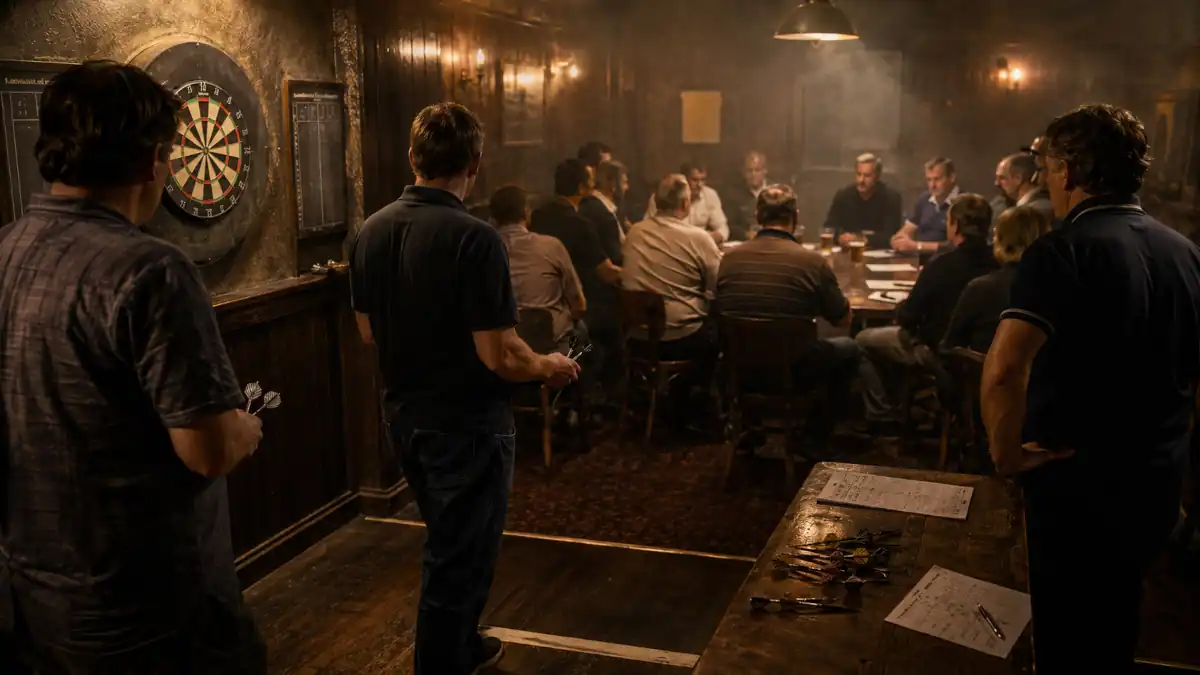
Jamie Harvey was one of those players where you did not need a spreadsheet to feel the point. Some players look perfect and leave you cold. Harvey was the opposite. Not polished flat. Not clinical. But alive.
When he came on stage, there was character in the room. The walk-on had Scotland stamped all over it, the body language had a bit of fight in it, and the throw never felt like it was trying to win a beauty contest.
That is the thing with Harvey. He did not play like a bloke terrified of making a mistake. He looked more like someone who would rather throw with his chest open and miss than stand there poking darts about like he had borrowed someone else’s arm.
DartWorldHub read: Jamie Harvey was not the clean champion poster. He was the noisy, colourful kind of darts character people remember because he made the whole room feel less sterile.
From “The Tartan Terror” to “Bravedart”
Jamie Harvey was originally known as “The Tartan Terror”. That already tells you the direction of travel. Scotland, attitude, a bit of menace, and no attempt to sound like a neat corporate darts product.
Later, “Bravedart” took over. A play on Braveheart, obviously, but it worked because it was not just some lazy pun. Harvey brought that Scottish fighting feel with him. Not in a fake movie way. More in the old darts way: a bit wild, a bit stubborn, and not always easy to control.
His walk-on music, “The Bonnie Banks o’ Loch Lomond”, made the whole thing even more obvious. Before the first dart had left his hand, you already knew which flag was in the room.
Simple version: “Bravedart” sounded like a joke for about half a second. Then you watched Harvey and thought, yeah, fair enough, that actually fits.
Jamie Harvey and the PDC rebellion
In 1993, Jamie Harvey was one of the players who stepped into the WDC breakaway. Later, that road became the PDC. Today it sounds almost tidy, like some clever rebrand that everyone could see coming. Back then? Not even close.
There was risk in it. Real risk. TV uncertainty, old-system pressure, bans, money worries, reputations on the line. Nobody knew for sure if the new road would work or if they were walking into a very public wall.
Harvey was not a silent extra in that story. He was one of the players who helped give the young professional game colour, noise and identity. Not as some boardroom type in a suit. As a player on the stage, doing the rough work while the whole thing was still wobbling.
Pattys read: “Bravedart” was not only about throwing brave darts. In 1993, brave also meant leaving the old structure when nobody could guarantee the new one would survive.
1996: his big year on the PDC stage
If you want one sporting marker for Jamie Harvey, 1996 is the year you grab first. At the PDC World Championship, he reached the semi-finals. Dennis Priestley stopped him there, but Harvey had already proved he belonged in the heavy part of the draw.
And it was not a one-off little sparkle either. That same year, he also reached the semi-finals of the World Matchplay at Blackpool, where Peter Evison eventually stopped him.
That is not world-title territory, no. But it is serious darts. Two huge semi-final runs in the same year, inside a young PDC still building its bones, is not something you wave away as “nice little career”.
Important bit: Harvey did not win one of the monster TV titles, but in 1996 he was exactly the kind of player nobody wanted popping up in their section of the draw.
The character fans loved
Jamie Harvey was not only popular because of results. Results help, obviously. Nobody becomes a proper stage name by being useless. But Harvey had that extra bit old darts used to have before everything started being trimmed into social-media-friendly clips.
A bit of pub. A bit of theatre. A bit of madness. And heart. Actual heart, not the kind of heart people claim in a press release because they need a quote for the sponsor.
He could lose and still leave people smiling. He could pull a crowd in without feeling like a fake character. With Harvey, you never got the feeling someone had invented him in a marketing meeting. He was just Jamie Harvey, and that was the whole point.
That is why he sticks: numbers can be looked up. Character has to be remembered. Harvey had enough of it to last longer than some bigger trophy cabinets.
The real Bravedart: illness, voice and fighting on
With Jamie Harvey, “Bravedart” became heavier later in life. It stopped being only a clever darts nickname and started sounding uncomfortably close to the truth.
After his bigger professional years, Harvey had to fight cancer. Treatment was brutal. He lost his voice box, had to deal with a permanent laryngectomy stoma, and went through the sort of thing that makes a missed double look like a playground problem.
And still, he stayed connected to darts. He kept playing, including for Ayrshire, and became one of those people where the nickname ends up meaning more after the stage lights have dimmed than it ever did during the walk-on.
No need to over-sugar it: this was rough. But it is also the part of Jamie Harvey’s story that makes “Bravedart” feel like more than a shirt name.
Jamie Harvey darts: 21g B&W Signature and no made-up warrior nonsense
With Jamie Harvey, we do not need to start inventing some fake 26g Braveheart hammer just because it sounds good in a product box. Player data links him with 21g B&W Signature darts. That is the known line.
And actually, that fits better. Harvey’s game was not about a dart that looked brutal on paper. His style had character, rhythm and attack. A classic 21g-style steel tip barrel makes more sense than some daft overbuilt monster that looks like it belongs in a toolbox.
B&W player darts are old-school gear now. That means you have to be careful. Some sets appear through specialist shops, older stock, vintage groups or collectors. Some will be gone before you even finish thinking. Some will not be the right model at all.
21g B&W Signature darts are the key Jamie Harvey reference.
Classic, grippy enough, not stupidly aggressive, and light enough to suit rhythm rather than brute force.
Players who want a classic steel tip feel around 21g with a clean, usable grip.
Do not assume every “Jamie Harvey” or B&W listing is the same dart. Check weight, condition, tip type and photos properly.
Important: if you want to copy the feel, think classic 21g steel tip with a proper grip. If you want the exact name, you are in specialist/vintage territory and need to look carefully.
Jamie Harvey facts
| Topic | Details | DartWorldHub read |
|---|---|---|
| Full name | Jamie Harvey | The Scottish player known forever as “Bravedart”. |
| Nickname | “Bravedart” / formerly “The Tartan Terror” | The Braveheart-style nickname fitted him better than most darts branding does. |
| Born | 15 August 1955, Glasgow, Scotland | Glasgow roots, Scottish stage feel, no mystery why the nickname stuck. |
| Died | 4 September 2025 | He passed away aged 70, remembered as one of darts’ true characters. |
| Throwing hand | Right-handed | No trick there. Right hand, big character, proper stage energy. |
| Known darts | 21g B&W Signature | A useful real reference, not a made-up modern marketing barrel. |
| Walk-on music | “The Bonnie Banks o’ Loch Lomond” | About as Scottish as you can make a darts walk-on without handing out shortbread. |
| PDC role | WDC/PDC founding player | One of the players who stood in the breakaway when the new road was still risky. |
| Big PDC run | World Championship semi-finalist 1996 | That was his strongest big-stage PDC marker. |
| World Matchplay | Semi-finalist 1996 | Same year, another proper run. That matters. |
| PDC title | Antwerp Open 2000 | A real ranked title, and proof he was not just there for the walk-on. |
Jamie Harvey darts check
I would not put an Amazon UK button here right now. I did not find a clean Amazon UK listing for Jamie Harvey 21g B&W Signature darts that I would trust for this page.
The closest clean product route I found is a specialist listing for Jamie Harvey 95% B&W 21g darts. That is much more relevant than sending people to random generic darts just because an Amazon button would look nice.
Pattys straight call: DartWorldHub does not earn anything from this green shop link. It is here as a service, so visitors do not get some random wrong barrel, soft tip version or marketplace rubbish shoved in front of their eyes just because somebody wanted an Amazon click.
Check Jamie Harvey B&W darts at Patanisto Sports
Before buying, check the exact details: steel tip, weight, condition and whether the shop can actually supply the set. With old B&W player darts, you are not buying modern shelf stock. You are often dealing with old stock, rare stock or collector-style availability.
Pattys Oche-Check: Bravedart was more than a nickname
Jamie Harvey was not one of those players where you read the honours list and instantly fall off your chair. No world title, no Taylor-style killing machine run, no cabinet full of major trophies.
But that is exactly why his story matters in a different way. Harvey was character. One of the early PDC names. A Scot with rough edges. A fan favourite. A semi-finalist on the big stage. A bloke who walked into the breakaway when the future was not guaranteed.
And later, after illness and a brutal personal fight, the nickname got heavier. “Bravedart” was no longer just a Braveheart pun. It suddenly sat a lot closer to the truth.
My take: Jamie Harvey was maybe not the biggest champion, but he was one of the players who made darts louder, more human and less plastic. You need those people in the story.
FAQ: Jamie Harvey
Why was Jamie Harvey called “Bravedart”?
“Bravedart” was a play on Braveheart and darts. Before that, Harvey was also known as “The Tartan Terror”. Both names fitted his Scottish stage identity pretty well.
Was Jamie Harvey part of the PDC breakaway?
Yes. Jamie Harvey was one of the WDC founding players. The WDC later became the PDC, so Harvey belongs in the original breakaway story.
What was Jamie Harvey’s best PDC World Championship run?
His best PDC World Championship run came in 1996, when he reached the semi-finals before losing to Dennis Priestley.
Did Jamie Harvey reach a World Matchplay semi-final?
Yes. He also reached the World Matchplay semi-finals in 1996. That same year is the big sporting marker in his PDC career.
What darts did Jamie Harvey use?
Player data links Jamie Harvey with 21g B&W Signature darts. These are old-school player darts, not a modern widely available Amazon product.
Can you buy Jamie Harvey darts today?
Sometimes you may find specialist or vintage listings, but I would not treat them like normal shelf stock. Check weight, condition, tip type and availability very carefully before buying.
When did Jamie Harvey pass away?
Jamie Harvey passed away on 4 September 2025, aged 70.
What happened to Jamie Harvey’s voice?
After cancer treatment, Harvey lost his voice box and had a permanent laryngectomy stoma. It became one of the hardest, most human parts of his story.
More DartWorldHub legends
If you want to place Jamie Harvey properly, these are the next names to read. Same rough era, same breakaway storm, different kinds of trouble at the oche.
- Gold Cup connection Chris Johns: “The Saint” → The calm Welshman who beat Jamie Harvey on the way to the 1989 BDO Gold Cup title.
- 1996 World Championship Dennis Priestley: “The Menace” → The man who stopped Harvey in the 1996 PDC World Championship semi-final.
- 1996 World Matchplay Peter Evison: “The Fenman” → The player who stopped Harvey at the 1996 World Matchplay before winning the title.
- Taylor era Phil Taylor: “The Power” → The giant Harvey kept running into during the years when the PDC machine was starting to grow teeth.
- The full split story The History of the PDC → The breakaway, the bans, the pressure and why names like Jamie Harvey mattered.
- Back to the hub Stars & Legends → More old-school names, modern stars and the stories behind the shirts.
Jamie Harvey sources
These links are useful for Jamie Harvey’s player data, WDC/PDC founding role, 1996 semi-final runs, illness story and old-school B&W darts reference.
- Player data Mastercaller: Jamie Harvey → Player profile with nickname, darts used, walk-on music, laterality, titles and major appearances.
- WDF profile WDF: Jamie Harvey → World Darts Federation profile with player background and recorded achievements.
- Career profile Darts Database: Jamie Harvey → Player profile with birth date, hometown, nickname, career statistics and tournament record.
- PDPA tribute PDPA: Jamie Harvey passes away → PDPA tribute covering Harvey’s passing, WDC founding-player role and major PDC appearances.
- PDC tribute PDC: Scottish star & founding player Jamie Harvey → Official PDC tribute to Jamie Harvey, his place in the breakaway and his biggest career runs.
- Player story Darts World: Remembering Jamie “Bravedart” Harvey → Feature looking back at Harvey’s character, career, illness and lasting place in darts memory.
- Darts history Patrick Chaplin: Jamie “Bravedart” Harvey → Historical reflection on Jamie Harvey, Scottish darts and the early WDC/PDC years.
- Product source Patanisto Sports: Jamie Harvey 95% B&W 21g Darts → Specialist product listing for Jamie Harvey B&W 21g darts. Check current stock and details before buying.
Official darts bodies & useful sources
If you want to look past the gear and into the official side of darts, these are useful sources for pro events, English-speaking darts structures, rankings, tournaments and the wider international scene.
- Professional darts Professional Darts Corporation (PDC) → The main professional stage for darts: events, schedules, scores, tickets, players and PDC tour news.
- World darts World Darts Federation (WDF) → The international darts federation, with world events, member nations, rankings, players and competitions.
- England England Darts → The official governing body for darts in England, covering national teams, world-ranked events and the English darts structure.
- Scotland Scottish Darts Association → Scottish darts news, competitions, national teams and tournament information from the Scottish darts scene.
- Wales Welsh Darts Organisation → The governing body of darts in Wales, covering Welsh national teams, competitions and world-ranking events.
- Ireland Irish National Darts Organisation (INDO) → Official Irish darts information, events and news from the Irish National Darts Organisation.
- United States American Darts Organization (ADO) → A useful source for US darts, rankings, approved tournaments, national events and American darts news.
- North America Championship Darts Corporation (CDC) → North America’s professional steel-tip darts tour and one of the key routes towards bigger PDC-stage opportunities.