Dart shafts comparison 2026: the hidden gearbox of your dart
Let’s get straight to it: for a lot of players, the shaft — or stem, as plenty of UK players call it — is just that cheap bit of plastic holding the flight on. Big mistake.
In reality, the shaft is the gearbox of your setup. It shifts the balance point and decides whether your dart sits nicely in the board or hangs out of the treble like it has had one too many at the pub. Three millimetres of length, or switching from soft nylon to carbon, can change the whole flight path.
If you just screw any old stem from the bottom of the case into your barrel, you are giving away points at the oche.
Here I’ll show you which shafts actually hold up in practice and league play, why aluminium can be a bit of a trap, and when carbon or fixed flight systems start to make real sense.
No time for waffle? Jump straight in:
- 2026 comparison: what holds, what works and what gets annoying
- Recommendations: what makes sense at the oche
- Why the wrong shaft length can mess with your throw
- ❓ FAQ: no-nonsense answers about loose stems and flights popping off
- Setup check: the rest of your dart setup
- Sources: why shafts are not just a tiny detail
What really matters with dart shafts
If you buy shafts at random, you often end up testing the wrong part of your setup. It is not the colour or the packaging that matters. It is three things: length, material and how cleanly the shaft sits in the barrel. That is where useful kit separates itself from annoying little setup problems.
Length: aggressive flight or steadier glide?
Why do so many pros use very short shafts? Because they make the dart fly quicker and more directly. The catch: short stems punish every little wobble in your release. A longer shaft works a bit like a longer wheelbase on a car. It calms the flight down and forgives small release mistakes. If you never test different lengths, you are basically throwing blind.
Of course I would like you to buy through DartWorldHub. But only if this actually suits your game. If it does not, no drama. Better that than me trying to sell you something you do not need.
Material: throwaway part or long-term fix?
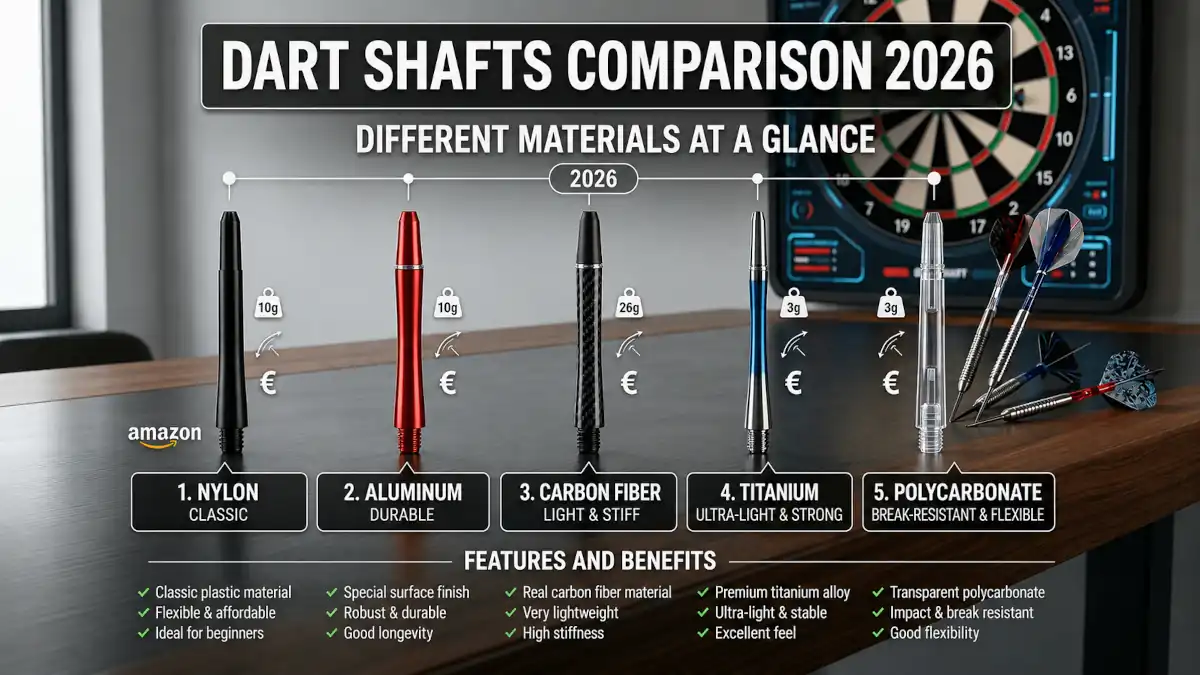
Nylon is cheap and, for plenty of players, a sensible starting point. But it is still a consumable part. After heavy impacts or Robin Hoods, a shaft like that can be ready for the bin. Aluminium looks more premium at first, but it can be a trap. After a Robin Hood, the top can bend or open up without you even noticing. Carbon costs more, but it usually brings more stability and durability to the setup.
O-rings: a simple fix for loose shafts
Few things wreck your rhythm more than a shaft you have to tighten before every visit. With aluminium stems, that happens all the time. A simple O-ring costs next to nothing, keeps the thread sitting properly in the barrel and saves you from constantly fiddling at the oche. If your setup is loose, your throw rarely feels calm.
Amazon stock changes all the time. Some lengths, colours or packs vanish quicker than you would expect. If a link shows as unavailable, check another variant or come back later. Quite often the whole product is not gone — just one colour or one length.
Dart shafts comparison 2026 – 10 picks worth checking (Amazon UK)
| Product | Type | Length | Level | Where to buy |
|---|---|---|---|---|
| Darts Corner Nylon Dart Shafts – VALUE PACK – 5 Sets – Black – Tweenie | Nylon | Feed-verified choice for Darts Corner nylon Tweenie value pack, five sets. | All-round | |
| Harrows Supergrip nylon shafts — Black/Gold, Medium 47 mm, 1 set / 3 shafts | Nylon / poly | Medium / approx. 47 mm | Beginner | |
| Condor AXE Alan Soutar “Soots” Clear Blue — Standard No.2, Long 33.5 mm, set of 3 | Fixed system | Long / 33.5 mm | Premium | |
| Harrows Supergrip Midi | Nylon / poly | Midi / approx. 40 mm | Middle ground | |
| Darts Corner Nylon Dart Shafts – VALUE PACK – 5 Sets – Black – Medium | Polycarbonate | Medium / approx. 48 mm | Practice / league | |
| One80 Tiro Flex Pro Dart Shafts – Combo Set – Medium | Feed-verified choice for One80 Tiro Flex Pro Medium combo set. | Medium / approx. 48 mm | Regular player | |
| L-Style – L-Shafts – Straight – Silent Spin – Black – L Style 330 47mm Medium | Nylon spin | 47mm | Spin system | |
| Harrows Supergrip Carbon | Carbon composite | Depending on variant | Regular player | |
| L-Style Carbon L-Shaft Locked Straight 225 — Black, Short-Midi, set of 3 shafts | Carbon | Size 225 / Short-Midi (35.5 mm in the linked specification) | Premium | If the exact Target Pro Grip Aqua nylon shafts — Medium 48 mm, 3 sets / 9 shafts is not available, Unicorn Gripper 3 Dart Shafts – Nylon Stems – Black – Medium is a sensible Darts Corner alternative for the same purpose. |
| L-Style Carbon Silent | Carbon spin | Depending on variant | Tournament / spin |
Note: shaft measurements can vary slightly depending on the brand and where the length is measured from. That is why the category matters most here: Short, Intermediate, Midi or Medium.
2026 comparison: what works, what lasts and what starts getting on your nerves
Let’s keep it short: a bad shaft ruins your grouping and makes your darts fly oddly, even though you first blame yourself. That is why you should not throw just anything on the back of your setup. Here is the practical take:
- The beginner: nylon or simple poly shafts in Medium or Intermediate → cheap, easy to replace and a sensible starting point for many players.
- The all-rounder: Target Pro Grip, Harrows Supergrip or Winmau Prism → the sort of models that help many players calm the setup down.
- The fussier player: spin systems or stronger hybrid options → useful if bouncers, Robin Hoods or flights popping off drive you mad.
- The player who wants minimal maintenance: fixed systems like Condor → fit it properly once and you usually get far less hassle at the back of the dart.
- The setup nerd: carbon or premium systems like L-Style → more expensive, yes, but often the route to a cleaner feel and better durability.
No-nonsense take from the oche:
Will an expensive shaft turn you into a pro overnight? Not a chance. But a poor or bent shaft can absolutely wreck your feel and rhythm. Better to use something clean that suits your throw than keep saving pennies in the wrong place.
If you never test your kit, you often give away more than you realise.
A popular Amazon listing does not make a shaft perfect. But it can be a useful first glance. What matters in the end is whether it suits your throw, not whether it happens to rank highly on Amazon today.
Recommendations: what actually makes sense at the oche
If the exact ONE80 Proplast Vice is not available, One80 Tiro Flex Pro Dart Shafts – Combo Set – Medium is a sensible Darts Corner alternative for the same purpose.
Guide: why your shaft matters more than many players think
Many players treat the shaft like a tiny throwaway part. That is where the trouble starts. The shaft affects how the dart flies, how the flight sits and how the whole setup feels. If something is off back there, you often blame your throw first, while the real problem has been sitting at the rear of the dart all along.
Material: nylon, aluminium, carbon or fixed system
Nylon is cheap, common and a sensible starting point for many players, but it is a consumable part. After heavy knocks or Robin Hoods, it can be damaged. Aluminium looks more serious, but there is a catch: after bouncers or impacts, the top can bend or open up. Carbon lasts longer and costs more. And if you are fed up with flights popping off, fixed systems like Condor are often one of the cleanest fixes.
Length: where a few millimetres change the angle
If your dart keeps landing at a strange angle, it is not always just your throw. Short shafts make the flight more direct and aggressive, but they punish small release errors sooner. Longer shafts often calm the flight down and can forgive a slightly less clean release. For many players, Intermediate or Inbetween is the sweet spot before going too extreme.
The 3 classic shaft buying mistakes
1. Buying by colour instead of effect. 2. Playing aluminium without O-rings and then moaning that everything keeps coming loose. 3. Keeping damaged or bent shafts in play just to save a few pennies. That is where a lot of unnecessary frustration starts. If a shaft is damaged, get it off the barrel.
⚖️ Competition check: If you start experimenting with your setup, do not forget the official limits. A dart must not be longer than 20 cm overall or heavier than 40 g. Go over that and you are outside the rules. Before building something odd, put a ruler next to it.
Player types: which shaft suits your throw?
Stop building your setup by colour or looks alone. A shaft should help your release, not fight it. If you keep using the same old rear setup even though it moves, loosens or just does not suit your throw, you are giving away more than you think. Here is the simple breakdown: use it as a starting point and adjust from there.
The beginner: nylon is your airbag
Do you need a premium setup in your first few practice sessions? No. At the start, darts often hit the wire, bounce out and sometimes cause the odd Robin Hood. A classic nylon shaft is cheap, quick to change and usually the sensible place to begin. Stick with Medium or Inbetween until your throw becomes more repeatable.
The improving player: consistency before design
Once your throw becomes more stable, you notice faster whether the back of the dart is doing its job. That is where systems like Target Pro Grip, Harrows Supergrip or Winmau Prism often make more sense than no-name bits from a random box. The flight sits better, the setup feels calmer and the thread is less likely to work loose in the barrel.
The demanding player: carbon or fixed systems
If you want as little hassle as possible at the back of the dart, carbon or fixed systems start to make a lot of sense. Carbon is light, lasts longer and feels like a cleaner next step for many players. And if you want minimal maintenance, fixed systems such as Condor are worth considering. Not everybody needs them, but anyone who plays a lot usually understands the appeal pretty quickly.
❓ FAQ: no-nonsense answers about loose stems and flights popping off
What is the best shaft length?
There is no perfect length for everyone. It depends on your barrel, your release and how the dart sits in the board. If you are trying to build a steady setup, Medium or Inbetween is often easier than jumping straight to very short shafts. Short can be brilliant, but it is not automatically best for every player.
When should I bin my shafts?
When the thread feels loose, the flight end has opened up or the material looks bent, cracked or damaged. At that point the setup starts moving at the back. Keeping a worn part in play may save a little, but it can reduce consistency.
Are carbon shafts worth it?
For many regular players, yes. Carbon usually lasts longer than standard shafts and can make the setup feel cleaner. But it is not compulsory for everyone. If you play a lot, get through parts and want less hassle at the back of the dart, carbon can start to make sense quite quickly.
Why do my flights keep falling off?
Usually because the top of the shaft has opened up, a Robin Hood has damaged it or the flight is not sitting properly. Missing rings or worn systems can also cause it. A fresh shaft, a flight punch with rings or a fixed system like Condor can help.
Aluminium or nylon: which is better?
For most players, nylon, poly or polycarbonate is usually easier to live with. Aluminium looks smart, but at the oche it can be annoying because it bends or opens up after hits and bouncers. Nylon-style shafts are cheap, easy to replace and often less hassle.
Do shafts really change my game?
Yes. Length, material and fit change how the dart flies and how it enters the board. You might not feel it on one throw, but over a long practice session or league night, the difference between a clean setup and a fiddly one becomes obvious.
Rules before pub talk: official sources such as the Professional Darts Corporation and other darts bodies explain the measurements and equipment limits. If you want to experiment with your setup, it is worth checking before you build something that gives you a silly problem later.
Setup check: the rest of your dart setup
A new shaft will not save you if the rest of the setup is ancient, damaged or just does not suit your throw. Once the back end is sorted, these parts are worth checking too:
- Flights Dart flights comparison 2026 Flight and shaft work together. If those two do not match, even a good dart can fly like a drunk wasp.
- Barrels Steel dart barrels comparison 2026 The heart of the throw. If the barrel does not suit you, no shaft in the world can fully fix it.
- Points Dart points comparison 2026 A balanced dart still needs a point that grips properly in the board.
- Accessories Dart accessories comparison 2026 O-rings, flight punch, spare parts and the small parts that prevent avoidable setup problems.
- Cases Dart case comparison 2026 If you use carbon shafts, a Condor system or another carefully tuned setup, do not just chuck your darts loose into a pocket.
Official darts bodies & useful sources
If you want to look past the gear and into the official side of darts, these are useful sources for pro events, UK darts organisations, rankings, tournaments and the wider international scene.
- Professional darts Professional Darts Corporation (PDC) → The main professional stage for darts: events, schedules, scores, tickets, players and PDC tour news.
- World darts World Darts Federation (WDF) → The international darts federation, with world events, member nations, rankings, players and competitions.
- England England Darts → The official governing body for darts in England, covering national teams, world-ranked events and the English darts structure.
- Scotland Scottish Darts Association → Scottish darts news, competitions, national teams and tournament information from the Scottish darts scene.
- Wales Welsh Darts Organisation → The governing body of darts in Wales, covering Welsh national teams, competitions and world-ranking events.
- Ireland Irish National Darts Organisation (INDO) → Official Irish darts information, events and news from the Irish National Darts Organisation.
- United States American Darts Organization (ADO) → A useful source for US darts, rankings, approved tournaments, national events and American darts news.
- North America Championship Darts Corporation (CDC) → North America’s professional steel-tip darts tour and one of the key routes towards bigger PDC-stage opportunities.